
Hurricane Damage to Cesspools and Septic Tanks: What Long Island Homeowners Need to Know
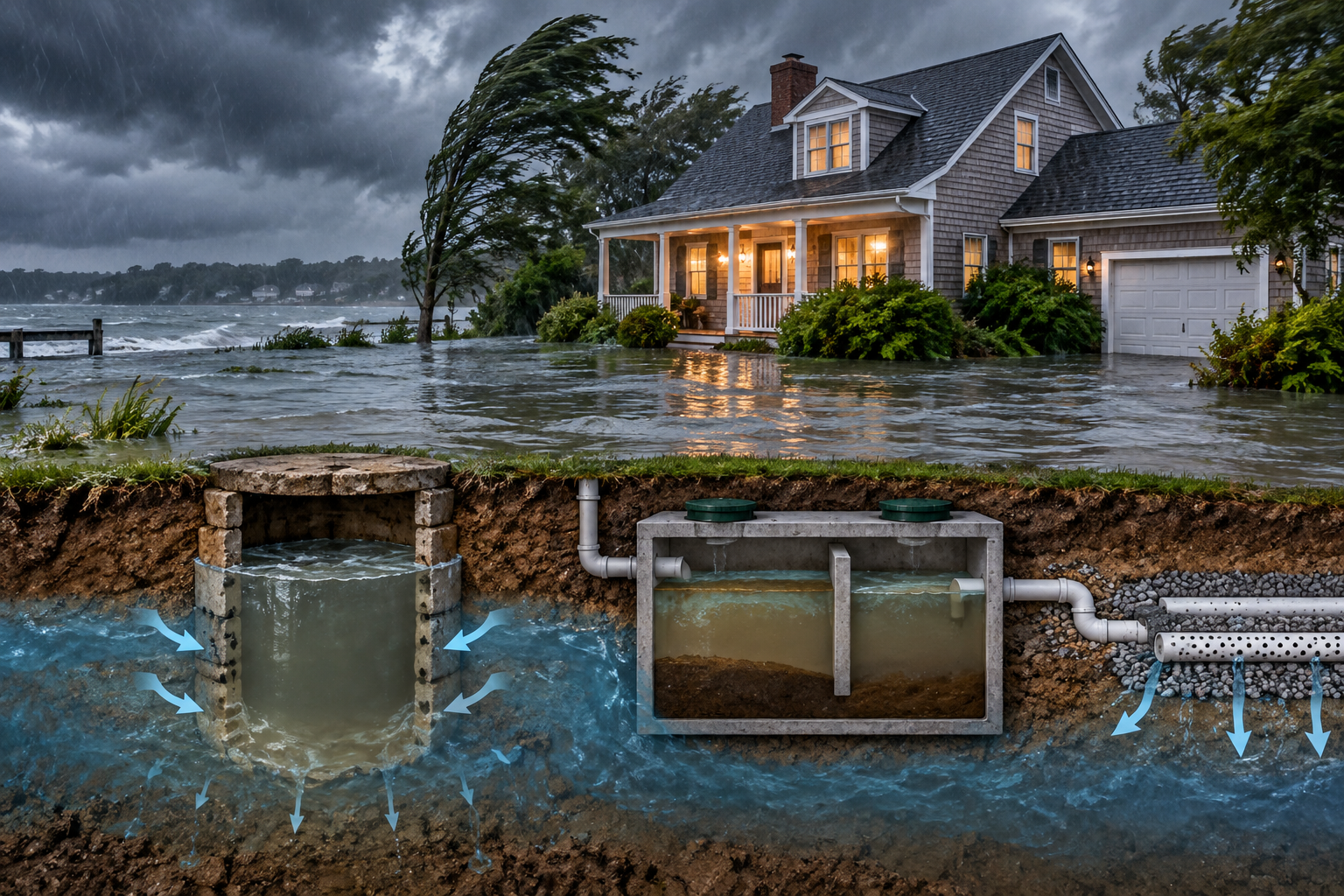
Anyone who has lived through a tropical storm on Long Island knows the drill: sandbags, flashlights, a full tank of gas, and a nervous eye on the basement. But there’s one part of the property that rarely makes the preparation checklist, and it’s the one that can create the biggest mess when things go wrong. If your home relies on a cesspool or septic tank rather than a municipal sewer connection, a hurricane can turn it from an out-of-sight system into a very in-your-face problem.
At Citywide Sewer-Drain & Plumbing, we field a wave of emergency cesspool and septic calls every time a major storm passes through Nassau and Suffolk counties. Most of the damage we see could have been reduced or avoided with a little planning. This guide explains why storms hit cesspools and septic tanks so hard, what you can do ahead of time, and how to handle the aftermath safely.
Cesspools vs. Septic Tanks: What’s in Your Yard?
A cesspool is the simplest form of on-site wastewater disposal. It’s a pit lined with concrete rings or stacked block, with open joints or perforations that let liquid seep out into the surrounding soil. Solids settle and slowly break down at the bottom while the liquid leaches away. Many homes have a second pit, called an overflow pool, that takes on the liquid once the main pool fills.
A septic tank is the more modern setup. Wastewater flows into a sealed concrete, fiberglass, or plastic tank where solids settle and begin to break down. Only the liquid leaves the tank, passing through an outlet baffle into a leaching pool or a drain field of perforated pipe, where the soil finishes the job. Newer homes and any system installed or replaced in recent years will almost always have a septic tank, and Suffolk County now requires advanced nitrogen-reducing systems for many new installations.
A cesspool has no separate tank and no engineered drain field. It depends entirely on the ground around it to absorb everything that goes in. That works reasonably well in Long Island’s sandy soil, which is why cesspools were the standard for decades. Tens of thousands of homes still run on them today, especially along Nassau County’s Gold Coast, where older estates and waterfront properties in Oyster Bay, Glen Cove, Sea Cliff, Locust Valley, Bayville, Mill Neck, Roslyn, Sands Point, Port Washington, Manhasset, and Great Neck were built long before sewer lines reached the North Shore.
Why Hurricanes Are So Hard on Cesspools and Septic Systems
Both types of system ultimately rely on the soil to absorb liquid, and neither has any defense once that soil is saturated. When several inches of rain fall in a few hours, or when a surge pushes bay water or Long Island Sound inland, the ground has nowhere to put it. On the North Shore, hilly terrain and pockets of dense glacial clay make things worse, since runoff races downhill toward harbor-front properties in places like Oyster Bay, Glen Cove, and Port Washington, and the soil there drains slowly once it is soaked.
Here’s what typically happens to a cesspool:
The pool stops draining. Water can’t leach out through the walls when the ground outside is already full of water. Groundwater may actually flow into the pit instead. The cesspool fills to the top, and the next flush has nowhere to go except back up the line into the lowest drains in your house, or up through the cover and into your yard.
The walls or cover can collapse. This is the danger that sets cesspools apart from modern septic tanks. Old block and precast rings are held in place partly by the soil around them. When that soil turns to slurry, the walls lose support. A cesspool that has been slowly deteriorating for years can cave in during a single storm, sometimes leaving a sinkhole in the lawn or driveway. Collapsed cesspools have swallowed cars, sheds, and, tragically, people. If you see the ground sinking or a depression forming, keep everyone away from the area.
The overflow pool floods first. Since the overflow pool is usually the one doing most of the leaching, it’s often the first to become waterlogged. Once it’s out of commission, the main pool loses its relief valve.
Septic tanks have their own set of storm problems:
The drain field or leaching pool stops absorbing. The tank may be fine, but once the soil around the drain field is waterlogged, liquid effluent has nowhere to go. It backs up into the tank and then into the house, or surfaces in the yard as gray, foul-smelling puddles.
The tank can shift, crack, or float. Concrete tanks can crack under the pressure of saturated soil. Fiberglass and plastic tanks are light enough that, if the groundwater rises around them and the tank is low on liquid, they can lift out of position and snap the inlet and outlet pipes. This is one reason you should not pump a lightweight tank completely dry right before a flood.
Pumps and alarms lose power. Homes with a raised or pressurized system rely on an effluent pump to move wastewater to the leaching area. When the power goes out for hours or days, that pump stops, and the holding chamber eventually overflows.
Sewage escapes into the ground. A flooded or damaged cesspool or septic tank releases raw, untreated wastewater directly into the soil. On Long Island, where drinking water comes from the aquifer beneath our feet and where the bays are already fighting nitrogen pollution, that contamination has consequences well beyond your property line.
Before the Storm: Get Your System Ready
The most effective preparation happens before a hurricane watch is ever issued. Once a storm is 48 hours out, it’s too late to schedule a pumping truck.
Have the cesspool or tank pumped if you are due. A pool or tank that’s already near the top has no room to absorb storm conditions. If it has been more than two or three years since your last pump-out, or if you can’t remember the last one, book it now. A recently pumped system also gives you some breathing room if you’re stuck at home for several days. One caution for lightweight septic tanks: don’t have them pumped bone-dry right before a flood, since a hollow tank is more likely to float. Ask your technician about the right level.
Get it inspected while it’s open. A pump-out is the ideal time for a technician to look at the walls, cover, baffles, and inlet and outlet pipes. Crumbling block, exposed rebar, root intrusion, a bowed cesspool wall, or a cracked tank lid are warning signs of a system that could fail under storm pressure. Better to know in September than to find out during a nor’easter.
Mark the location. Find your cesspool cover, septic tank lids, distribution box, and overflow pool or drain field, and mark them with stakes or flags. After a storm, a technician working in a flooded yard will need to locate them quickly, and you’ll want to keep vehicles and foot traffic off those spots.
Keep heavy loads away. Never park cars, trailers, or dumpsters over or near the cesspool, tank, or drain field, and be especially careful in the days around a storm when the ground is soft. Extra weight on saturated soil is one of the most common triggers for a collapse.
Protect the electrical components. If your septic system has a pump, float switches, or an alarm panel, find out how to shut off power to those components before the storm arrives. A pump that tries to run while submerged is a pump you’ll be replacing.
Redirect surface water. Make sure gutters, downspouts, sump pump discharge lines, and driveway runoff all drain away from the cesspool or drain field. Every gallon you keep off that ground is capacity your system keeps.
Stock up on water. Fill bathtubs and buckets ahead of time. If the system backs up, you’ll want water for basic sanitation that doesn’t have to go down a drain.
During the Storm: Go Easy on the Drains
While the rain is falling and the ground is saturated, treat your plumbing as if it has almost no capacity, because it doesn’t. Skip laundry and dishwasher loads, take short showers or none at all, and spread out flushing. If you notice gurgling toilets, slow tub drains, or a sewage odor in the basement, stop using water entirely until conditions improve.
After the Storm: What to Check and What to Avoid
Wait before resuming normal use. Even after the sky clears, the soil around your cesspool or drain field may stay saturated for days. Look at the yard. If there’s standing water over the system, or the ground feels spongy, it’s not ready. Keep water use to a minimum until the ground firms up.
Walk the property carefully. Look for wet spots or pooling that weren’t there before, unusually green patches of grass, sunken areas, exposed pipes, or a cover or tank lid that has shifted or become exposed. A depression forming over a cesspool is a serious warning sign. Rope off the area and keep children and pets away.
Check for backup indoors. Basement floor drains, utility sinks, and first-floor showers are usually the first fixtures to show trouble.
Do not open the cover yourself. A flooded cesspool or septic tank can contain dangerous gases, and a weakened cover or rim can give way under your weight. Leave the inspection to a licensed professional.
Do not pump a flooded cesspool or tank right away. It sounds backwards, but pumping while the surrounding ground is still waterlogged can remove the internal pressure holding a cesspool’s walls in place and trigger a collapse, or cause a septic tank to float. A technician will evaluate the soil conditions before deciding when it’s safe.
Clean up sewage safely. If wastewater backed up into your home, treat every surface it touched as contaminated. Wear gloves and boots, ventilate the space, discard porous materials like carpet and drywall that absorbed sewage, and disinfect hard surfaces thoroughly. For anything more than a small area, professional remediation is the safer route.
When to Call a Professional
Some situations should not wait:
- Sewage backing up into the house
- Standing wastewater in the yard that doesn’t recede within a day or two
- A cover or tank lid that has shifted, cracked, or become exposed
- A septic pump alarm that won’t clear once power is restored
- Any sinking, cracking, or depression in the ground near the cesspool or tank
- Strong sewage odors indoors or outside
Citywide Sewer-Drain & Plumbing provides emergency cesspool and septic service across Long Island and the five boroughs, including the Gold Coast communities of Oyster Bay, Glen Cove, Sea Cliff, Locust Valley, Roslyn, Port Washington, Manhasset, Great Neck, Sands Point, and Old Westbury. We handle storm damage assessments, pumping, aeration, repairs, septic tank and drain field work, and full cesspool and septic replacement, and our crews know how to work safely in flooded conditions. We can tell you quickly whether a system can be restored or needs to be replaced.
Prepare Now, Not When the Forecast Changes
Hurricane season in the Atlantic runs from June through the end of November, with the busiest stretch typically falling in late summer and early fall. That gives Long Island homeowners a clear window to get ahead of it. A pump-out and inspection this month is far cheaper, and far less unpleasant, than an emergency call in the middle of a storm.
Contact Citywide Sewer-Drain & Plumbing to schedule your pre-storm cesspool or septic inspection or to get help after the weather has passed.
📞 Schedule a Cesspool service today 1-800-310-2564